
Signs You Need New Brakes: 7 Warnings Every Driver Should Know
Your brakes rarely fail without giving you a warning first. A squeal here, a little vibration there, or a pedal that feels different can be your vehicle’s way of asking for attention.
Knowing the signs you need new brakes helps you handle a small repair before it becomes a larger: and potentially less safe: problem. This matters even more for drivers around Elizabethton and East Tennessee, where hills, stop-and-go traffic, and winding roads can put extra heat and wear on your braking system.
Here are seven realistic warning signs to watch for, along with guidance on what can wait briefly and what should be treated as urgent.
1. Your brakes squeal or chirp when you stop
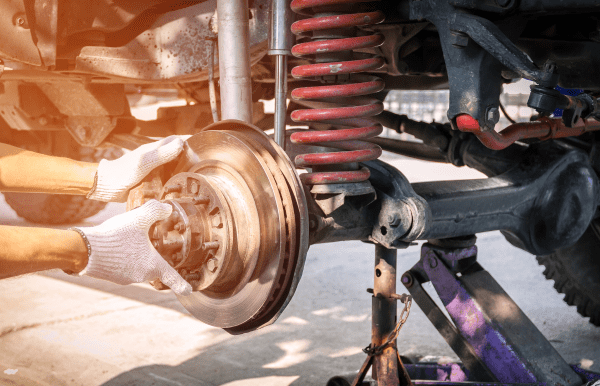
A high-pitched squeal is one of the most common early signs of worn brake pads. Many pads include a small metal wear indicator. When the friction material gets thin, that indicator touches the rotor and creates an annoying squeak.
It is not your car being dramatic. It is doing its job.
A brief squeak can sometimes come from moisture, light surface rust, or brake dust. However, a noise that happens regularly when you apply the brakes should be checked. Your pads may be nearing the end of their service life.
What to do
Schedule a brake inspection soon, especially if the noise is getting louder or happens every time you stop. Replacing pads while there is still usable material left may help protect the rotors from unnecessary damage.
If a technician can safely view the pad through the wheel spokes, less than about one-quarter inch of friction material generally means the pads are due for close inspection or replacement. Pad thickness can vary by vehicle, so a proper measurement is better than guessing.
2. You hear grinding or harsh scraping
Grinding is more serious than squealing. It often means the brake pad’s friction material has worn away and the metal backing plate is contacting the rotor.
Once that happens, continuing to drive can damage the rotor, caliper, and other brake components. What might have been a straightforward pad replacement can turn into a more extensive brake repair.
What to do
Treat grinding or metal-on-metal scraping as an urgent problem. Avoid driving the vehicle unless it is necessary to move it to a safe location. Arrange a professional inspection, and consider towing if braking performance has also changed.
This is one of the clearest signs you need new brakes: and possibly new rotors, too.
3. Your vehicle takes longer to stop
Does your car need more road than usual to come to a complete stop? Do you have to press the pedal harder to get the same braking response?
Longer stopping distances can result from worn pads, overheated or glazed pads, damaged rotors, low brake fluid, a sticking caliper, or another problem in the brake system. It is not always solved by replacing the pads alone.
This issue deserves prompt attention because it affects how much time and space you have to respond to traffic, pedestrians, and sudden stops.
What to do
Increase your following distance and avoid unnecessary heavy loads or aggressive driving until the vehicle is inspected. If the change happened suddenly, have the vehicle checked immediately rather than waiting for the problem to “settle down.”
4. The brake pedal feels soft, spongy, or sinks
A healthy brake pedal should feel firm and consistent. If it feels soft, spongy, unusually low, or slowly sinks toward the floor while you hold it, there may be air in the brake lines, a fluid leak, a master cylinder issue, or another hydraulic problem.
This is not a normal brake pad-wear symptom. It can indicate that the braking system is not building pressure properly.
What to do
A soft or sinking pedal should be treated as urgent. Stop in a safe place and arrange an inspection. Do not assume that adding fluid will fix the problem. Brake fluid does not normally disappear without a reason, and a leak must be found and repaired.
If the pedal drops close to the floor or the vehicle suddenly has much less braking power, do not drive it to the shop. Towing is the safer choice.
5. The steering wheel or brake pedal vibrates
A pulsing brake pedal or shaking steering wheel during braking often points to rotor thickness variation, uneven pad material transfer, overheating, or another issue around the wheel and suspension.
Drivers may notice this more at highway speeds or when braking downhill. East Tennessee’s hills and curves can add heat to the system, especially if you ride the brakes for long stretches.
Not every vibration means the rotors are “warped.” Tires, wheel balance, alignment, wheel bearings, and suspension components can also cause shaking. That is why a proper inspection matters.
What to do
Have the brakes and related components checked soon. You can also review our guide to car shaking when braking for more background.
Avoid repeatedly riding the brake pedal downhill. When appropriate and safe for your vehicle, selecting a lower gear can reduce the amount of continuous braking. Never use driving techniques that exceed your vehicle’s recommendations or your comfort level.
6. Your car pulls to one side when braking
If the vehicle drifts or pulls left or right when you press the brake pedal, the pads may be wearing unevenly. A sticking caliper, restricted brake hose, uneven hydraulic pressure, or damaged hardware can also cause the problem.
Uneven tire pressure or a suspension issue may create a similar feeling, so the cause is not always the brake pads. Still, pulling during braking can reduce control and should not be ignored.
What to do
Have the vehicle inspected within a short time: sooner if the pull is strong or getting worse. Avoid driving at high speeds until the cause is identified.
A technician should compare pad wear from side to side, inspect the calipers and hoses, and check the tires and suspension as needed. Replacing only one brake pad is not a proper solution; brake pads are normally serviced in axle sets so braking remains balanced.
7. The BRAKE or ABS warning light comes on
A dashboard warning light is your vehicle asking you not to guess.
The red BRAKE light may relate to low fluid, a parking brake that is engaged, worn components, or a fault in the braking system. The amber ABS light points to a problem with the anti-lock braking system. It does not always mean the brake pads need replacement, but it still requires diagnosis.
If a warning light appears along with a soft pedal, fluid leak, grinding, or reduced braking power, the situation is more urgent.
What to do
Check that the parking brake is fully released. If the light remains on, arrange a professional inspection promptly. Do not simply clear the warning light or disconnect the battery and assume the problem is gone.
The AAA guide to brake warning signs also recommends paying attention to warning lights, fluid leaks, unusual noises, vibrations, and changes in stopping performance.
Brake pad wear vs. urgent brake problems
Not every brake symptom means you need every brake part replaced. The right repair depends on measurements and inspection.
| Warning | Usually means | Recommended response |
|---|---|---|
| Light, consistent squeal | Pads may be getting thin | Schedule service soon |
| Pads under about 1/4 inch | Limited friction material remains | Inspect and likely replace |
| Grinding or metal scraping | Pads may be completely worn; rotors may be damaged | Stop driving and arrange immediate inspection |
| Longer stopping distance | Worn pads, heat damage, fluid, or system problem | Get checked promptly |
| Soft or sinking pedal | Possible hydraulic fault or leak | Do not drive; arrange towing if needed |
| Vibration or pulsation | Rotor, pad, tire, or suspension concern | Schedule inspection soon |
| BRAKE or ABS light | Warning of a possible system fault | Diagnose promptly |
A brake inspection should include more than a quick look at the pad. The technician should evaluate pad thickness and wear pattern, rotor condition, caliper movement, brake lines, fluid level, and warning-system faults.
Honest brake service in Elizabethton
At A-1 Auto Care & Tire Center, we have served Elizabethton since 1985. Our team handles brake inspections and repairs for cars, SUVs, vans, and light trucks of all makes and models.
We believe you should understand what your vehicle needs before approving repairs. That is why we follow an only work you approve policy. We explain the concern, show you what we find, and provide a clear recommendation instead of adding work without your permission.
Our parts and labor are backed by a 24-month/24,000-mile warranty, giving you added confidence after the repair. We also offer free pick-up and delivery service for added convenience, along with real-time service updates and a comfortable waiting area.
If you notice squealing, grinding, pulling, vibration, a soft pedal, longer stopping distances, or a brake warning light, do not panic: but do not ignore it either. Contact A-1 Auto Care & Tire Center at (423) 543-5657 or book an appointment. We will inspect your brakes, explain your options, and only perform the work you approve.