
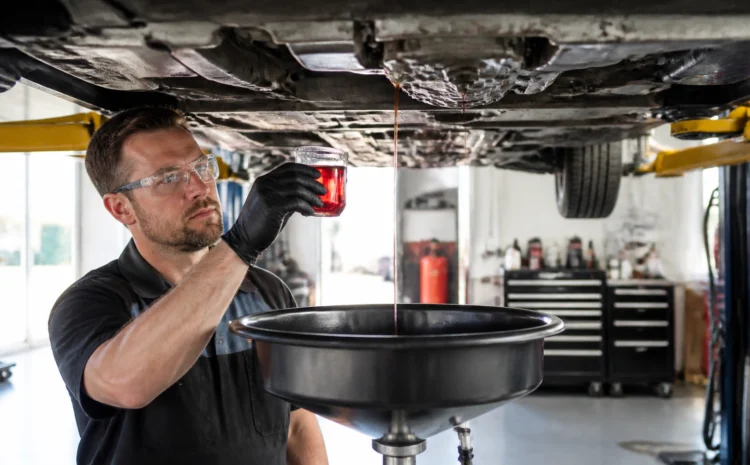
45,000 Miles and Counting: Here’s When You Should Actually Change Your Transmission Fluid
If you have ever glanced at a modern car owner’s manual and noticed that the transmission fluid section looks suspiciously blank: or boldly claims the fluid is good for “life”: you are not alone. It sounds like a dream come true. One less thing to worry about, right? Unfortunately, in the real world of automotive mechanics, “lifetime fluid” often translates to “lifetime of the warranty,” not the actual lifetime of your vehicle.
At A-1 Auto Care & Tire Center, we have been helping drivers in Elizabethton and the surrounding East Tennessee region keep their cars on the road since 1985. Over the decades, we have seen plenty of transmissions give up the ghost prematurely simply because owners trusted a marketing phrase over mechanical reality. Knowing when to change transmission fluid can save you from a multi-thousand-dollar repair bill down the road.
Let’s break down the truth about transmission maintenance, why intervals matter, and how our local terrain impacts your vehicle’s health.
The “Lifetime Transmission Fluid” Myth Debunked
To understand why transmission fluid needs changing, you first need to understand what that fluid actually does. Automatic transmission fluid (ATF) isn’t just a lubricant. It is a hydraulic fluid, a coolant, and a cleaner all rolled into one. It operates under immense pressure and incredible heat, flowing through intricate valve bodies, cooling clutches, and lubricating spinning gears.
Over tens of thousands of miles, that hardworking fluid breaks down. Thermal breakdown occurs as the fluid repeatedly heats up and cools down, causing it to lose its viscosity and friction characteristics. Tiny metal shavings from normal wear and tear, clutch material, and varnish accumulate in the fluid.
When a manufacturer stamps “lifetime fluid” on a sealed transmission, they generally mean the expected service life of the vehicle while under factory warranty: usually around 100,000 miles. If you plan on keeping your car past that milestone (and who doesn’t these days?), ignoring your transmission fluid is a gamble you are bound to lose. Major transmission manufacturers like ZF, whose units are found in countless modern vehicles, actually recommend changing fluid every 50,000 miles.
When to Change Transmission Fluid: The 30,000 to 60,000-Mile Rule
So, if the manual isn’t giving you straight answers, what is the golden rule? For the vast majority of vehicles on the road, a transmission fluid service every 30,000 to 60,000 miles is the sweet spot.
Here is how that timeline typically breaks down depending on your transmission type:
- Traditional Automatic Transmissions: Conventional fluid generally calls for a change every 30,000 to 50,000 miles. Even with high-grade synthetic fluids, experienced technicians recommend dropping the pan, replacing the filter, and refreshing the fluid around 50,000 miles as cheap insurance.
- CVTs (Continuously Variable Transmissions): CVTs are notoriously sensitive to contaminated or degraded fluid. Because they rely on a steel pushbelt gripping variable pulleys, clean fluid is non-negotiable. Many specialists recommend servicing CVTs every 30,000 to 45,000 miles.
- Manual Transmissions: Manual gearboxes use gear oil rather than automatic transmission fluid, but it still wears out. Changing manual transmission fluid every 30,000 to 60,000 miles keeps shifting smooth and prevents synchro wear.
Why East Tennessee Driving Conditions Change the Equation
If you live right here in East Tennessee, standard maintenance schedules in the back of your manual might not cut it. Car manufacturers usually base their recommended intervals on “normal” driving conditions: think flat highways, moderate temperatures, and steady cruising speeds.
Our local environment is anything but normal:
- Mountain Roads and Steep Grades: Driving up and down winding mountain passes forces your transmission to constantly downshift and work overtime, generating massive amounts of heat that fry fluid much faster than flatland driving.
- Stop-and-Go Traffic: City commuting and heavy local traffic mean constant gear changes at low speeds without optimal airflow cooling the transmission pan.
- Towing and Hauling: If you tow a boat to Watauga Lake or haul heavy loads around Carter County, your transmission experiences extreme stress.
Under these “severe service” conditions, you should slash your maintenance intervals. If you frequently navigate mountain roads or tow trailers, bringing your vehicle in closer to the 30,000-mile mark is one of the smartest preventative measures you can take.

Signs Your Transmission Fluid is Begging for Help
You don’t always have to wait for the odometer to hit a specific number. Sometimes your car will give you unmistakable warnings that its transmission fluid is spent. Keep an eye out for these red flags:
- Dark or Burning Fluid: Healthy transmission fluid is typically bright red or pink with a slightly sweet smell. If you check your dipstick and find dark brown or black fluid with a burnt odor, it is time for an immediate change.
- Slipping or Delayed Shifting: If your engine revs up, but the car hesitates to accelerate, or if the transmission delays engaging into Drive or Reverse, low or degraded fluid could be starving the hydraulic circuits.
- Strange Noises: A whining, buzzing, or humming sound: especially when shifting: often points to restricted fluid flow through a clogged filter.
- Surging or Rough Shifting: If your vehicle feels like it is abruptly kicking into gear rather than shifting smoothly, old fluid losing its frictional properties is a prime suspect.
Transparent Auto Care You Can Trust in Elizabethton
Let’s be honest: automotive maintenance can sometimes feel intimidating. Between confusing jargon and fear of unnecessary upsells, it is easy to put off routine services until something breaks. We believe car care should never feel like a guessing game.
At A-1 Auto Care & Tire Center, we operate on a strict only work you approve policy. When you bring your vehicle in for a transmission check or fluid exchange, our thoroughly trained mechanics inspect the system honestly, show you what we find, and let you make the call with zero high-pressure sales tactics.
We pair that transparency with dealership-standard diagnostic equipment and repair quality at fair, honest prices. Plus, every repair and service we perform is backed by our robust 24-month/24,000-mile warranty on all parts and labor, giving you complete peace of mind long after you leave our shop.
We also know how valuable your time is. Fitting car maintenance into a busy work week can be a headache, which is why we offer a free pick-up and delivery service for our local customers. Whether you are at home or at the office, we will come grab your vehicle, perform the necessary service in our comfortable shop, and bring it right back to you.
Don’t wait for a complete transmission failure to find out what is happening beneath your car. If your vehicle is approaching that 45,000-mile mark: or if you simply want a second opinion on your fluid condition: stop by or give us a call today. Let our family treat yours with the dignity, respect, and reliable service you deserve.