
Brake Fluid Matters: 5 Reasons Your Stopping Power Isn’t What It Used to Be
Most drivers in Elizabethton think about their brakes in terms of pads and rotors. You hear a squeak, you think “time for new pads.” You feel a vibration in the steering wheel, you think “rotors are warped.” But there is a silent partner in your braking system that does all the heavy lifting: the brake fluid.
Brake fluid is the lifeblood of your vehicle’s stopping power. It is a hydraulic fluid that takes the pressure from your foot on the pedal and multiplies it to clamp those pads onto the rotors. Without it, you are just pressing a pedal for exercise.
The trouble is, brake fluid isn’t a “set it and forget it” item. It ages, it wears out, and it can actively work against you if ignored. If you’ve noticed your car isn’t stopping with the same crispness it used to, or if the pedal feels a bit “mushy,” it might not be the hardware at all. Here are five reasons why your brake fluid matters more than you think.
1. It’s a Magnet for Moisture
Brake fluid is hygroscopic. That is a fancy way of saying it loves to soak up water. Even though your brake system is theoretically “sealed,” moisture finds its way in. It sneaks in through microscopic pores in the rubber hoses, through seals that have seen better days, or even every time the reservoir cap is opened for a quick check.
In a humid environment like East Tennessee, this happens faster than you’d expect. Over time, that water content builds up. Why is that bad? Because water doesn’t compress like hydraulic fluid, and more importantly, it has a much lower boiling point. When your fluid is saturated with water, its performance starts to dip, and your safety goes right along with it.
2. The Boiling Point Problem
Braking is essentially the process of turning kinetic energy (motion) into thermal energy (heat). When you’re heading down a steep grade or making a sudden stop on the 19-E, your brakes get incredibly hot.
Fresh brake fluid is designed to withstand high temperatures without boiling. However, as it absorbs moisture (as we mentioned above), its boiling point drops significantly. If the fluid boils, it turns into gas. Unlike liquid, gas is compressible.
This is where you get that terrifying “spongy” pedal feel. You press the brake, and the pedal goes almost to the floor because you’re compressing air bubbles instead of moving hydraulic fluid. This “brake fade” can lead to a complete loss of stopping power right when you need it most. At A-1 Auto Care & Tire Center, we test for moisture content to ensure your fluid can handle the heat.
3. Contamination and Internal Sludge
Brake fluid doesn’t just deal with moisture; it also has to deal with internal wear. Over thousands of miles, the internal rubber seals in your master cylinder and calipers begin to wear down. Tiny particles of rubber and metal shavings can break off and enter the fluid stream.
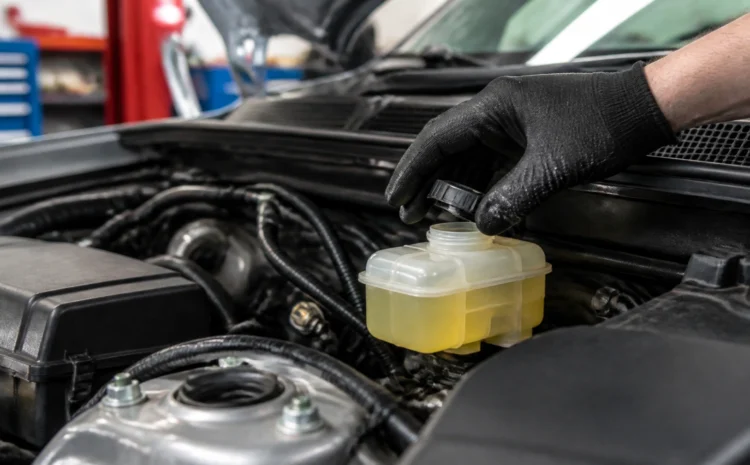
This creates a dark, murky sludge. If you look at your reservoir and the fluid looks like coffee instead of clear honey, you have a contamination problem. This sludge can clog the small passages in your braking system, leading to inconsistent pressure and reduced responsiveness. This is one of the key signs you need new brakes serviced, even if the pads themselves still have plenty of life left.

4. Protecting Your ABS and Master Cylinder
Brake fluid is packed with corrosion inhibitors to protect the metal parts of your braking system. Over time, these inhibitors break down. When the fluid becomes acidic and moisture-laden, it starts to eat away at the expensive components inside your car.
The most vulnerable part is often the Anti-lock Braking System (ABS) module. These units contain incredibly fine valves and sensitive electronics. Replacing an ABS module or a master cylinder because of internal corrosion is a much bigger bill than a simple fluid flush.
We’ve been serving Elizabethton since 1985, and we’ve seen countless “major” repairs that could have been avoided with simple, preventative maintenance. Our brake services are designed to catch these issues before they turn into a four-figure repair bill.
5. The Dangerous Increase in Stopping Distance
At the end of the day, it comes down to physics. Degraded brake fluid increases your stopping distance. It might only be a few feet at first, but in an emergency, those few feet are the difference between a close call and a trip to the body shop.
Because the degradation happens slowly over years, many drivers don’t notice the change until it’s drastic. You adapt to the longer pedal travel and the softer feel. It’s only when you drive a car with fresh fluid that you realize how much performance you’ve lost. Maintaining your brake health is about more than just passing an inspection; it’s about ensuring that when you hit the brakes, the car responds exactly how you expect it to.
Signs You Need New Brakes or a Fluid Flush
How do you know if it’s the fluid or the physical hardware? While a professional inspection is the only way to be 100% sure, here are a few clues:
- Squealing or Grinding: This is usually the hardware. Metal-on-metal noises almost always mean your pads are gone.
- A Soft or Spongy Pedal: This is the classic symptom of old, moisture-ridden brake fluid or air in the lines.
- The “Sink”: If you’re sitting at a red light and the pedal slowly sinks toward the floor under steady pressure, your master cylinder is likely struggling: often due to old fluid.
- Warning Lights: If your ABS or brake light pops up on the dash, don’t ignore it. It’s your car’s way of telling you the hydraulic pressure is off.
Transparent Service You Can Trust
At A-1 Auto Care & Tire Center, we don’t believe in “guessing” when it comes to your safety. We provide dealership-standard quality with the honesty you expect from a local Elizabethton shop. We follow a strict “only work you approve” policy. We’ll show you exactly what’s going on with your brake fluid, explain why it needs attention, and wait for your green light before we pick up a wrench.
We also stand behind our work with a 24-month/24,000-mile warranty on all parts and labor. We want you to drive away with total peace of mind, knowing your stopping power is back to factory standards.
If you’re busy with work or family, don’t sweat the logistics. We offer a free pick-up and delivery service within the Elizabethton area. We’ll grab your car, perform the necessary brake service, and bring it back to you while you go about your day. Or, feel free to hang out in our comfortable waiting area while we give your vehicle the care it deserves.
Don’t wait until your stopping power is a memory. If your brakes feel “off,” give us a call or stop by the shop. Let’s make sure your car stops as well as it goes.